Draw a card.
One prompt for your next AI session, designed to disrupt the smooth path toward the obvious.
Inspired by Brian Eno's Oblique Strategies, made for the AI age.
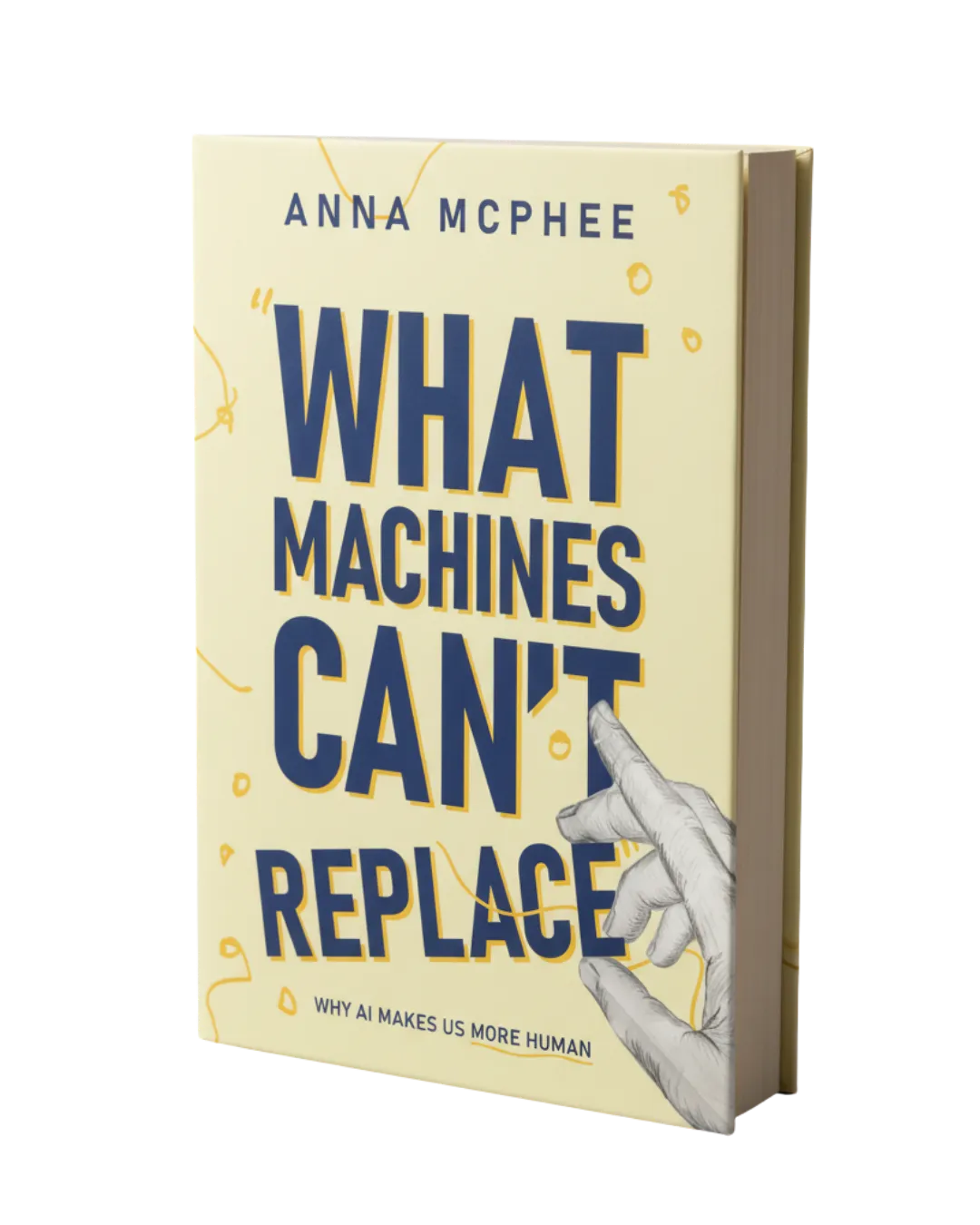
From the , a companion to What Machines Can't Replace by Anna McPhee
In 1975, Brian Eno and Peter Schmidt published Oblique Strategies, a deck of cards designed to break creative deadlock. Each card offered a single constraint: Use an unacceptable colour. Honour thy error as a hidden intention. You drew one, sat with it, and the sideways pressure changed how you thought about the work.
These cards follow the same principle, but the disruption comes through a conversation with your AI. Where Eno might say Try faking it, a Contract Card says Ask your AI to predict what you'll do next. If it's right, you're being predictable. The mechanism is different. The philosophy is the same: introduce a constraint you'd never choose yourself.
Every card here is a two-player exercise. Eno's cards work alone. These only work with an AI in the room, and they use what AI actually is (predictable, contextless, confident in its defaults) to surface what you actually are. They're called Contract Cards because that's the book's central idea: the implicit contract between a human creator and their AI, where each brings something the other can't.